
Increasing the room temperature is only one part of creating a heated practice environment. People attempting hot yoga at home also need to consider humidity, ventilation, floor safety, temperature monitoring and what happens if they become unwell while practising alone.
A professional studio is designed to manage multiple environmental and operational variables. A small HDB bedroom with a portable heater behaves differently.
Temperature Can Become Uneven
Portable heaters often create hot spots. The area near the device may become much warmer than the opposite side of the room.
A single thermostat may measure only one location. The participant can therefore underestimate the heat close to the mat or heater.
Studio systems are generally designed to distribute heat more consistently across a larger space.
Humidity Changes the Experience
Heat and humidity interact. A warm room with high humidity can feel substantially more demanding because sweat evaporates less efficiently.
Singapore’s outdoor climate may already increase indoor humidity. Adding heat without monitoring moisture can create an environment that feels more intense than expected.
Temperature alone does not describe the complete exposure.
Ventilation Still Matters
Closing every door and window may retain heat, but it can also reduce air movement. A stuffy room becomes uncomfortable and may make perceived effort rise quickly.
Ventilation needs to balance fresh air with temperature control. A studio system can manage this more predictably than an improvised home setup.
Participants should not assume that the hottest possible room is the most effective.
Portable Heaters Create Safety Concerns
Heaters need adequate clearance from mats, towels, curtains and furniture. Electrical loading and extension-cord use also require caution.
The device should remain stable and should not sit where the participant can contact it during a transition. Household members, children and pets add further considerations.
Manufacturer instructions and home electrical safety should not be ignored.
HDB Space Limits Movement
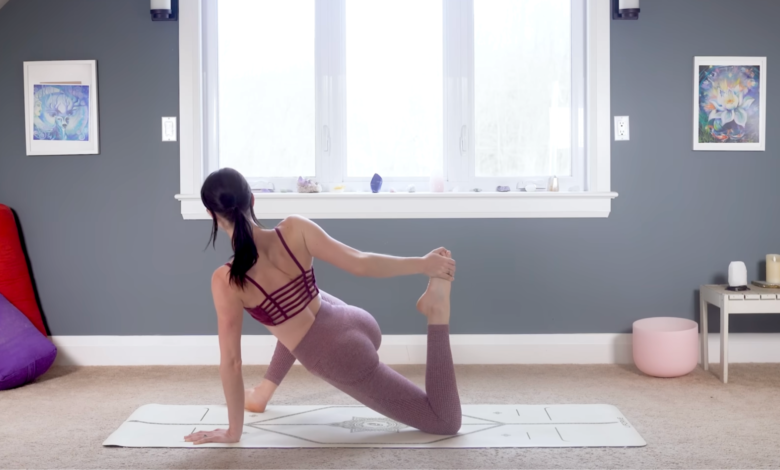
A yoga sequence can include standing balances, lunges and transitions that extend beyond the mat. Furniture and walls may restrict these movements.
Heat can also make the floor or mat slippery. The practice area should remain clear, level and free from trip hazards.
A compact sequence may be more appropriate than trying to reproduce a full studio flow.
Practising Alone Changes Risk Management
In a class, an instructor and other participants can notice when someone becomes unwell. At home, the person may be alone.
Dizziness, nausea, confusion or unusual weakness should not be treated as challenges to overcome. The session should stop, and appropriate help should be sought where needed.
The participant should keep an easy exit from the heated room.
Video Instruction Has Limits
A recorded class cannot see whether the participant is losing balance, forcing range or showing signs of heat intolerance.
The person needs established movement experience and clear self-scaling rules. Complex or unfamiliar postures may not be suitable for an intensely heated home session.
Live instruction can still be limited by camera angle and internet connection.
Sweat Management Affects the Home
Heavy sweating reaches mats, floors, towels and nearby furnishings. Surfaces need suitable cleaning and drying.
Poor ventilation can slow drying and create odour or moisture problems. The room should be returned to a normal condition after practice.
Studio cleaning systems are built around repeated high-sweat sessions.
Energy Use Can Be Inefficient
Heating one room to a high temperature may require substantial energy, especially if the space leaks air or uses air conditioning before the session.
The cost and preparation time should be considered. A home practice that is difficult to set up may not become consistent.
Convenience should be assessed across the full process, including heating and cleaning.
A Warm Practice Is Not Identical
Home participants can use a comfortably warm environment without attempting to reproduce a precise studio temperature. The training benefit still comes from controlled movement, breathing and consistent practice.
Chasing maximum heat can add risk without improving technique. The environmental dose should remain appropriate for the person and space.
At True Fitness Singapore, a purpose-managed studio provides instructor guidance and an environment designed for heated group practice.
Home Can Support the Studio Routine
Room-temperature or gently warmed home sessions can reinforce familiar postures, mobility and breathing between classes.
The home environment does not need to compete with the studio. It can provide shorter, lower-complexity practice when travel time or scheduling prevents attendance.
This supporting role may be more sustainable than trying to transform a small room into a commercial heated studio.
Heat Is an Operational System
Studio-grade heated yoga depends on temperature distribution, humidity, ventilation, safe flooring, cleaning and supervision. Turning up a heater addresses only one component.
Anyone practising at home should prioritise a safe, controllable environment over achieving the highest temperature. A well-managed moderate session provides more value than an improvised setup that makes heat the dominant challenge.