

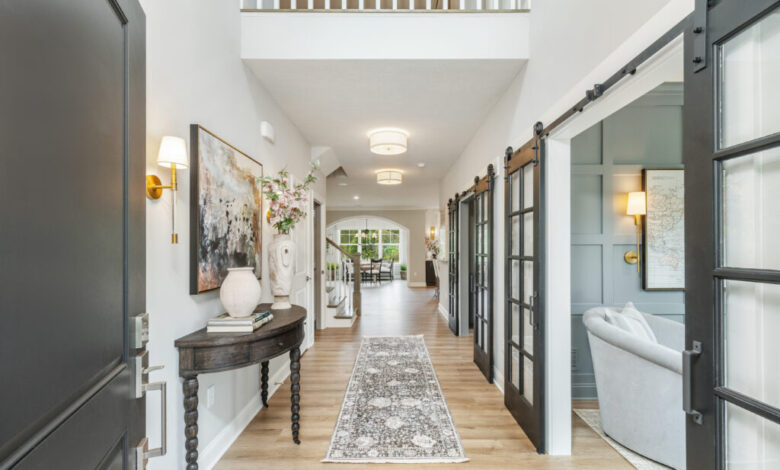
The entryway serves as the threshold between the chaos of the outside world and the comfort of personal sanctuary. It delivers the initial impression for visiting guests and provides the final parting view as household members head out each morning. Despite playing such a pivotal architectural role, entryways frequently devolve into neglected drop zones for muddy footwear, junk mail, discarded umbrellas, and tangled pet leashes.
Designing an entrance that feels both functional and emotionally comforting requires deliberate planning. A truly welcoming foyer strikes a delicate equilibrium between utilitarian organization and sensory warmth. By treating the entry area as a dedicated interior room rather than a generic transit corridor, you can establish an inviting ambiance that sets an immediate, tranquil tone for the entire residence.
Establishing an Intuitive and Functional Layout
Before selecting wall colors or accent accessories, one must address the underlying mechanics of foot traffic. An entryway must accommodate physical movement with ease. If entering the home requires squeezing past oversized furniture or stepping over floor clutter, the space immediately induces psychological friction.
A practical entryway layout relies on intuitive zoning:
-
The Primary Landing Zone: A clear surface placed immediately inside the door swing where occupants can deposit handheld essentials like car keys, sunglasses, outgoing letters, and mobile phones.
-
The Footwear Transition Area: Dedicated, low-profile storage that keeps daily shoes off the main walking path while remaining easily accessible for quick departures.
-
The Garment Station: Sturdy hooks or a compact closet setup capable of handling heavy outerwear, hats, and daily bags without sagging or visually overcrowding the wall plane.
-
Clear Walking Clearance: Maintaining at least thirty-six inches of unobstructed passage from the door threshold into adjacent living spaces to ensure open physical circulation.
Evaluating how household members naturally enter and exit the residence clarifies what functional pieces are truly mandatory, preventing the space from becoming overcrowded with non-essential furnishings.
Mastering Layered Lighting for Ambience and Clarity
Lighting sets the emotional temperature of any interior space. Entryways often suffer from an overreliance on a single, harsh ceiling light fixture that casts cold shadows across the floor. To cultivate genuine warmth, the illumination strategy must combine ambient, task, and accent light sources.
A statement ceiling fixture, such as a semi-flush drum light, a woven rattan pendant, or a classic lantern, establishes general ambient visibility. However, the secret to creating warmth lies in lowering the primary light sources closer to eye level. Incorporating a small ceramic table lamp on a console table or hardwiring a pair of warm-toned wall sconces softens architectural edges and introduces a gentle glow.
Sellers and renovators should pay strict attention to color temperature. Entryway light fixtures should consistently utilize warm white bulbs rated between 2700K and 3000K on the Kelvin scale. Cool white or daylight bulbs with ratings of 4000K or higher create an institutional, clinical glare that undermines comfort. Integrating dimmable switches or smart plugs allows you to dial down illumination levels as evening sets in, producing a soft nightlight for arriving guests.
Selecting Anchoring Furniture With Dual Utility
Unless an entryway boasts expansive square footage, every piece of furniture positioned within the space must earn its footprint through dual utility. Selecting furniture that combines closed storage with open display surfaces preserves practical utility without cluttering the visual field.
A slim console table is an exceptional anchor for narrow entry halls. Choose a table with shallow depth, roughly ten to fourteen inches, to leave plenty of walking room. Tables featuring small drawers allow you to conceal charging cables, spare keys, postage stamps, and flashlights out of sight. The open surface above can then host decorative accents, framed artwork, and a small decorative dish for daily pocket items.
Seating represents another crucial element of a hospitable entrance. A small timber bench, an upholstered stool, or a vintage wooden settle gives visitors a comfortable place to sit while untying boots or slipping on running shoes. If space permits, choose a bench with an open lower shelf for woven baskets, or opt for a lift-top storage chest that hides off-season accessories like winter scarves, heavy mittens, and beach towels.
Incorporating Mirrors to Expand Light and Space
Foyers are often light-deprived areas lacking exterior windows. A strategically positioned mirror acts as a visual amplifier, multiplying whatever natural daylight filters in through front door transoms, sidelights, or neighboring rooms.
Beyond bringing in light, a mirror creates the illusion of architectural depth. A medium or large mirror mounted directly above a console table visually doubles the hallway width, making modest vestibules feel expansive and airy. Circular or arched mirrors are particularly effective in entryways because their soft contours counter the rigid vertical and horizontal angles of doorframes, baseboards, and console edges.
Position the mirror so that it reflects an appealing visual feature, such as a piece of vibrant wall art, a botanical arrangement, or a view into a bright living room, rather than reflecting an untidy coat rack or an unfinished basement door.
Introducing Warmth Through Tactile Textiles and Rugs
Textiles introduce acoustic dampening and tactile softness, absorbing the hollow echoes typical of hard-tiled or hardwood hallways. The rug chosen for an entryway must balance visual appeal with rugged resilience, as it bears the brunt of street grit, moisture, and heavy foot traffic.
-
Durable Natural Fibers: Rugs crafted from natural jute, sisal, or mountain grass provide rich texture, earthy organic tones, and remarkable abrasion resistance.
-
Performance Synthetics: Modern performance flat-weaves and machine-washable floor runners mimic traditional Persian or vintage kilim designs while offering effortless stain maintenance.
-
Proportional Scaling: The rug should span the majority of the entrance walking lane, leaving roughly four to eight inches of visible bare floor along the baseboards to frame the space correctly.
Always anchor entryway rugs with a dense, non-skid rubber rug pad. A sliding floor covering represents a safety hazard and creates a disheveled appearance that detracts from an otherwise manicured environment.
Layering Nature and Organic Decorative Elements
An entryway bridges the natural outdoor landscape with the built interior environment. Introducing natural elements into the space creates an intuitive transition that immediately breathes vitality into the home.
A stoneware vase filled with tall seasonal foliage, eucalyptus branches, or dried florals provides vertical presence on a tabletop without requiring ongoing horticultural care. If your entrance receives adequate natural sunlight from adjacent windows, a robust potted houseplant, such as a snake plant, ZZ plant, or cast-iron plant, introduces lush natural greenery that flourishes with minimal attention.
Natural textures can also be woven in through storage accessories. Handcrafted sea grass baskets, split-wood trays, and turned-timber coat hooks introduce irregular, organic surfaces that soften painted walls and smooth flooring.
Infusing Subtle Scents for Lasting Impressions
Olfactory cues connect directly to the memory and emotional centers of the human brain. Long before a visitor fully registers your furniture arrangements or lighting fixtures, their impression of your home is shaped by scent. A warm entryway should possess a subtle, clean, and signature fragrance.
Avoid overpowering chemical aerosol sprays or overly sweet synthetic plugin diffusers, which can trigger headaches and respiratory irritation. Instead, favor subtle, slow-releasing options:
-
Reed diffusers utilizing natural essential oils
-
Soy or beeswax candles scented with cedarwood, amber, subtle vanilla, or citrus
-
Small dishes of dried botanicals, whole cloves, or cinnamon bark
-
A light spritz of linen water on entryway curtains or upholstered benches
The objective is not to mask poor ventilation with heavy perfume, but rather to infuse the air with a welcoming note that conveys cleanliness, rest, and domestic calm.
Frequently Asked Questions
How can I design an inviting entryway if my front door opens directly into a living room?
When a home lacks a dedicated foyer, you can create a faux entryway using strategic furniture placement. Position a low-backed sofa with its rear facing the entrance door, and place a narrow sofa console table directly behind it. This arrangement establishes a clear physical boundary between the entrance path and the lounge area. Lay down a defined runner or rectangular rug within that corridor, mount a small floating wall shelf for keys, and add a few vertical coat pegs to anchor the zone as a distinct transitional space.
What is the ideal wall paint finish for high-traffic entryway walls?
Entryway walls experience frequent contact from dirty hands, backpacks, and wet umbrellas, making paint durability essential. Avoid flat or matte finishes, as they absorb oils, mark easily, and burnish when scrubbed. Instead, select an eggshell or satin finish for primary wall surfaces. These sheens offer a soft, low-glare appearance while providing sufficient moisture resistance to withstand regular wiping with a damp cloth and mild soap.
How should wet footwear and dirty umbrellas be handled without ruining entryway decor?
Incorporate dedicated utility pieces designed with hidden functionality. Use a low-profile, heavy-gauge metal boot tray lined with smooth river stones; the stones allow moisture to drain off the soles while hiding dirty runoff beneath an attractive natural layer. For umbrellas, choose a heavy ceramic, spun-brass, or earthenware crock that doubles as a decorative floor sculpture when completely empty.
How can I keep an open entryway coat rack from looking cluttered and messy?
The most effective rule for open wall hooks is strict seasonal curation. Reserve visible wall pegs exclusively for everyday items currently in active use, such as one jacket per household member and a single dog leash. Store heavy seasonal coats, sports gear, and excess tote bags inside a bedroom closet or tucked away in opaque woven storage baskets placed beneath a bench. Limiting the number of hanging garments preserves visual order.
What style of console table works best in extremely tight or narrow hallways?
For exceptionally tight corridors, floating wall-mounted consoles or demi-lune tables provide the best balance of utility and floor clearance. A floating shelf table mounts directly into wall studs, leaving the entire floor surface completely open underneath, which makes a narrow hall feel visually wider. Demi-lune tables feature a curved half-moon design with zero sharp corners, preventing people from catching their clothes or hips on edges as they navigate past.
How do I make a dark entryway with zero natural windows feel brighter without using sterile lighting?
To brighten a windowless entryway without sacrificing warmth, combine high-reflectance light colors with multi-point lighting. Paint walls and woodwork in warm, light-reflective neutrals like soft linen, warm cream, or pale greige. Hang a sizable mirror opposite the path of interior light flow from neighboring rooms. Install several low-wattage, warm-toned accent lights, such as a console lamp paired with directional ceiling downlights focused directly on art, to wash vertical wall surfaces in warm illumination.


