
Selecting the right floor is one of the most consequential decisions in home design. Flooring anchors the room visually, dictates acoustic and thermal comfort, and determines long-term maintenance and resale value. This guide, Choosing the Perfect Flooring for Every Room, walks through durable options, performance criteria, installation realities, and room-specific recommendations so you can make evidence-backed choices that fit lifestyle, budget, and design goals.
How to evaluate flooring choices quickly
Begin with a short checklist that clarifies priorities before you evaluate materials.
- Durability needs: Does the household include kids, pets, heavy foot traffic, or plan to host frequent gatherings?
- Moisture exposure: Which rooms face regular water or humidity exposure?
- Thermal performance: Do you want floor warmth or compatibility with underfloor heating?
- Acoustic needs: Is noise control important for multi-story living?
- Maintenance tolerance: How much time will you spend cleaning and refinishing?
- Budget and lifecycle cost: Consider upfront cost and realistic longevity and replacement cycles.
Answering these questions up front narrows suitable materials and prevents costly mistakes.
Core material categories and their performance profiles
Understanding the fundamentals of each material clarifies tradeoffs between lifespan, comfort, cost, and maintenance.
Solid hardwood
Solid hardwood offers long life and refinishing potential. It is ideal for living rooms, dining areas, and bedrooms where moisture is limited. High-quality hardwood can be sanded and refinished multiple times, extending service life for decades.
Key performance notes:
- Excellent longevity when maintained; a single well-cared-for installation can last 50 years or more.
- Susceptible to moisture and humidity swings; use humidity control or avoid in basements and bathrooms.
- Provides resale value and a warm visual character; available in many species and grain patterns.
- Refinishing restores appearance but requires downtime and professional labor.
Engineered hardwood
Engineered hardwood uses a layered plywood or high density core with a real wood veneer. It resists dimensional movement better than solid wood and performs well in areas with moderate moisture variation.
Key performance notes:
- More stable in kitchens or lower levels than solid hardwood when correctly installed.
- Veneer thickness matters; thicker wear layers extend sand-and-refinish capability.
- Can be nail-down, glue-down, or floating; installation method affects sound and thermal properties.
Luxury vinyl plank and tile (LVP/LVT)
Luxury vinyl delivers water resistance, strong scratch performance, and realistic aesthetics that emulate wood or stone. It is increasingly common in transitional areas where moisture and traffic coincide.
Key performance notes:
- Excellent waterproof performance when seams and transitions are correctly detailed.
- Durable and low maintenance with a protective wear layer; ideal for kitchens, mudrooms, and bathrooms.
- Can be installed over many subfloors and is often compatible with radiant heat.
- Quality varies by wear layer thickness and core type; choose a trusted grade with warranty.
Porcelain and ceramic tile
Tile offers unmatched water resistance and design versatility. Porcelain is harder and less porous than ceramic and is preferred for floors that require heavy moisture resistance.
Key performance notes:
- Ideal for bathrooms, showers, kitchens, and entryways prone to moisture.
- Large format tiles create a sense of continuity but require a flat, level substrate.
- Grout lines and sealants must be maintained to prevent staining and water intrusion.
- Hard, cold underfoot unless paired with radiant heating or area rugs.
Natural stone
Stone such as granite, slate, and marble conveys luxury and durability, but each stone type has different porosity and maintenance needs.
Key performance notes:
- Slate and granite are typically durable and suitable for high-traffic zones; marble is more prone to etching and staining.
- Requires professional sealing on a schedule and careful grout detailing.
- Heavy weight may require structural considerations on upper floors.
Laminate
Laminate is a cost-effective wood-look option made from fiberboard with a printed layer sealed by a protective coating.
Key performance notes:
- Good scratch resistance and easy cleaning; not fully waterproof unless specified as waterproof laminate.
- Floating installation minimizes subfloor prep in many cases.
- Limited refinishing potential; damaged planks are replaced rather than sanded.
Cork and bamboo
Cork provides acoustic damping and a cushioned feel, while strand-woven bamboo can be as hard as some hardwoods when manufactured properly.
Key performance notes:
- Cork offers sound and thermal comfort and is renewable, but it can dent under heavy concentrated loads.
- Strand-woven bamboo is durable and sustainable, but quality varies with manufacturing and finishes.
- Both require careful selection for moisture-prone areas and appropriate finishes.
Room-by-room recommendations and rationale
Entry and mudroom
Requirements: resistance to grit, moisture, and impact; easy cleanup.
Best picks: porcelain tile, luxury vinyl plank, sealed stone.
Rationale: These materials resist salt and grit tracked from outside, withstand wet shoes, and clean easily. Add a durable transition strip and a recessed mat to protect the adjacent flooring.
Kitchen
Requirements: frequent spills, dropped dishes, heavy foot traffic, standing comfort.
Best picks: luxury vinyl plank, engineered hardwood in open-plan layouts, porcelain tile with underfloor heating.
Rationale: Kitchens need water-resistant, scratch-resistant floors with easy maintenance. LVP combines comfort and resilience, while porcelain is ideal for long-term durability. Consider anti-fatigue mats at work zones.
Bathroom
Requirements: full water exposure, frequent cleaning, slip resistance.
Best picks: porcelain tile, waterproof LVT, sealed natural stone with proper slip-rated finishes.
Rationale: Waterproofing and correct substrate detailing are paramount. Use linear drains and minimally sloped thresholds to avoid pooling. Choose textured finishes for wet slip resistance.
Living room and dining
Requirements: comfort, aesthetics, durability in high-traffic zones.
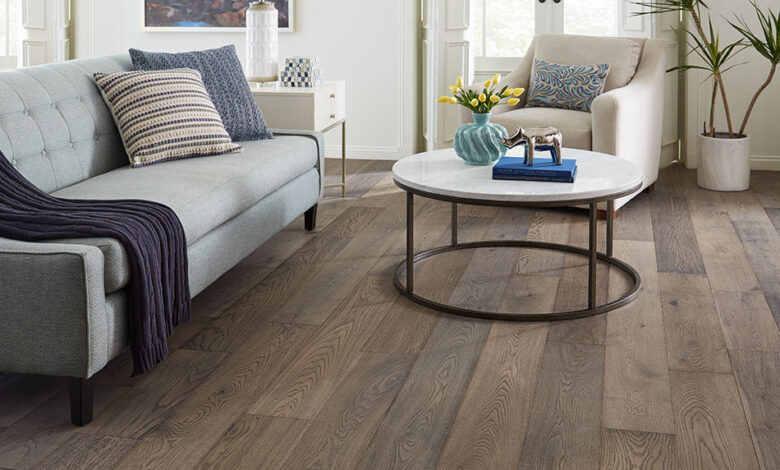
Best picks: solid hardwood, engineered hardwood, high-end laminate, and area rugs layered over these surfaces.
Rationale: These rooms benefit from wood warmth and refinishing potential. Use durable finishes and area rugs to protect high-traffic paths and dining chair movement.
Bedrooms
Requirements: acoustics, thermal comfort underfoot, low VOCs.
Best picks: solid hardwood over radiant heat, cork, carpet for softness.
Rationale: Bedrooms prioritize comfort and quiet. Soft underfoot materials and underlayment for soundproofing support restful environments. Prioritize low-VOC adhesives and finishes.
Basement and lower-level spaces
Requirements: moisture tolerance, mold resistance, thermal stability.
Best picks: engineered hardwood rated for basements, luxury vinyl plank, sealed concrete with area rugs.
Rationale: Basements are prone to humidity; choose materials with water resistance and an elevated installation method or a proper moisture mitigation system.
Installation and substrate considerations that affect performance
Many flooring failures stem from poor substrate preparation or inappropriate transitions.
Subfloor flatness and leveling
Large format tiles and engineered floors demand tight flatness tolerances. Use self-leveling compounds and proper adhesives to avoid telegraphing and premature cracking.
Moisture testing and barriers
Concrete slabs must be tested for moisture vapor emission before installation. Install recommended vapor barriers, and follow manufacturer guidelines for adhesive selection to avoid adhesive failure and plank cupping.
Acclimation and expansion gaps
Wood and some composite floors require acclimation to the home environment. Allow for expansion gaps at perimeter conditions and avoid tight butt joins that cause buckling.
Transitions and thresholds
Transitions between rooms with different materials must accommodate different expansion rates and thicknesses. Use transition strips that protect edges and allow for movement.
Maintenance strategies to extend lifespan
A proactive maintenance routine extends performance and preserves appearance.
Routine cleaning
- Use soft-bristle brooms or microfibre mops to avoid scratches.
- Clean spills promptly to avoid staining or warping.
- Follow manufacturer cleaning recommendations for pH and product compatibility.
Preventive measures
- Place walk-off mats at entrances and felt pads under furniture legs.
- Use caster cups for heavy furniture to avoid indentation.
- Maintain indoor humidity within recommended ranges for wood floors to minimize movement.
Periodic professional care
- Refinish solid hardwood as needed based on wear patterns.
- Reseal stone and grout on a multi-year schedule.
- Replace damaged tiles or planks promptly to prevent water intrusion.
Lifetime cost analysis: beyond upfront price
Assess total cost of ownership by factoring:
- Initial purchase and installation.
- Expected service life and refinishing possibilities.
- Maintenance costs and routine consumables.
- Potential energy savings if paired with radiant heat.
- Impact on resale value; natural wood and well-installed stone often enhance resale premiums.
A higher upfront investment in durable materials frequently yields lower lifecycle cost because of reduced replacement cycles and greater retained value.
Sustainability and indoor air quality factors
Sustainable choices reduce environmental impact and improve indoor health.
- Choose floors with low VOC adhesives and factory-applied, low VOC topcoats.
- Prioritize FSC-certified wood, rapidly renewable bamboo, reclaimed wood, or recycled-content LVP when sustainability is a priority.
- Consider end-of-life recycling programs or reclaimed flooring options to reduce landfill contribution.
Design tips for seamless transitions and perceived space
Flooring choice affects perceived room size and flow.
- Use wider planks and lighter tones to make rooms read larger.
- Continue the same floor through sightlines to increase visual continuity.
- Match finish sheen across adjacent surfaces to avoid abrupt visual breaks.
Checklist before you buy and install
- Confirm room-specific performance requirements and moisture levels.
- Request full material specifications and warranty terms including wear layer information.
- Verify substrate preparation responsibilities and who will test moisture levels.
- Ask for sample installation photos and references from similar projects.
- Confirm maintenance schedule and product availability for future repairs or replacements.
Frequently Asked Questions with real-life focus and new insights
Q1: What flooring is safest for toddlers and pets in a high-activity home?
Choose luxury vinyl plank with a robust wear layer for scratch resistance and waterproof performance. Pair with area rugs at play zones and non-slip pad underlays. Maintain nail trims for pets to reduce scratching and use pet-safe cleaners to avoid residue buildup.
Q2: Can I install hardwood over radiant heat and what are the caveats?
Engineered hardwood is generally compatible with radiant heating when manufacturer guidelines are followed. Ensure surface temperature limits are not exceeded, use an approved adhesive or floating installation, and maintain stable humidity to minimize movement.
Q3: How do I match flooring to existing trim and cabinetry without making the space feel cluttered?
Select flooring tone that sits between the lightest and darkest elements in the room to create balance. Use consistent undertones across wood, trim, and cabinets rather than trying to match exact species, which prevents visual competition and produces cohesion.
Q4: How much does professional installation affect longevity compared to DIY?
Professional installation significantly reduces risk of premature failure due to improper substrate prep, inadequate adhesives, or poor acclimation. For large format tile, hardwood and radiant setups, professional labor is a cost-effective investment in performance.
Q5: Are there flooring warranties that matter beyond wear layer thickness?
Yes. Look for warranties that cover structural integrity, stain resistance, and water damage for the applicable room. Understand what actions void warranties, such as improper subfloor prep or using unapproved adhesives.
Q6: How should I prepare the home environment before hardwood delivery and installation?
Stabilize HVAC and humidity levels 48 to 72 hours before delivery, keep the space temperature controlled, and clear installation areas of furniture and debris. Proper staging minimizes acclimation time and reduces installation complications.
Choosing the perfect flooring for every room requires a clear understanding of how materials perform in real conditions, how installation affects longevity, and which maintenance routines preserve value. With the right selections, attention to substrate and installation, and a practical maintenance plan, your floors can be both a durable workhorse and a defining design statement for years to come.