
Australian summers are hard on outdoor spaces. Playgrounds heat up, alfresco tables sit empty and parked cars turn into ovens. A well-designed commercial shade structure blocks UV and heat before they reach people, surfaces and vehicles.
Demand for shade sails in Sydney keeps growing as schools, councils and business owners respond to longer, hotter summers. The same pressures apply in Brisbane, Perth and Adelaide, where UV levels often reach extreme by mid-morning. Commercial sites face stricter engineering and safety standards than a home backyard, so planning matters.
This guide covers how schools, cafés and car parks use shade, what each site needs and where to place structures for the best result. The principles behind shade sails across Sydney apply to commercial sites in every state.
Schools: Protect Students During Peak UV
Most Australian schools follow sun-safety policies that require shade during outdoor play. Focus cover where students spend the most time.
- Playgrounds and sandpits: Children play here for long, unstructured periods.
- Assembly and outdoor learning areas: These see heavy use between 10 am and 3 pm.
- Walkways and pick-up zones: Students often wait here in direct sun.
- UV rating: Choose fabric that blocks 90 percent of UV or more.
Play equipment needs protection too. Metal slides and rubber softfall get hot enough to burn skin in direct summer sun. Shade keeps these surfaces cooler and usable all year.
Cafés: Keep Outdoor Seating Comfortable
Heat and glare push customers indoors or away entirely. Shade over alfresco areas keeps tables in use through warm afternoons.
- Breathable shade cloth suits open courtyards because it lets hot air escape.
- Waterproof PVC works where you need cover from summer storms.
- Footpath dining permits often limit fixings on public land, so check with your council first.
- Colour choice should match your shopfront and surrounding buildings.
Shade over west-facing windows also cuts the heat entering the building. That reduces the load on air conditioning in kitchens and dining rooms.
Car Parks: Cooler Vehicles and Less UV Damage
A car in direct summer sun can reach cabin temperatures above 60°C within an hour. Shaded bays keep vehicles cooler and protect paintwork, dashboards and upholstery from UV damage.
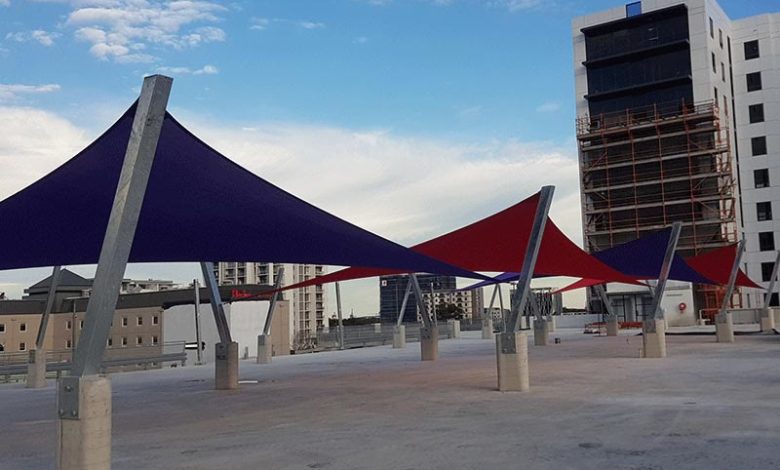
- Cantilever structures keep bays free of posts, which makes parking and turning easier.
- Multi-span sails cover long rows at a lower cost per bay.
- Post placement should avoid turning circles and kerbs to prevent vehicle strikes.
- Height clearance must suit delivery vans and service vehicles.
Some sites pair car park shade with solar panels to generate power from the same footprint.
Placement Tips for Commercial Sites
- Map the sun. Track shadows at 10 am, noon and 3 pm in summer. Prioritise north and west exposure.
- Engineer for wind. Commercial structures need certification for the site’s wind rating, especially in coastal and cyclone-prone regions.
- Confirm approval. Most commercial shade structures need a development application or complying development certificate.
- Plan maintenance. Inspect fabric tension, fittings and footings every year. Remove sails ahead of severe storms where the design allows.
Schools need shade over play, learning and waiting areas. Cafés need comfortable, weather-ready seating. Car parks need wide coverage with clear vehicle access. Start with a sun map of your site, check council requirements and choose UV-rated fabric built for Australian conditions. Good planning delivers cooler spaces, lower energy use and safer outdoor areas for years.